Backflow Prevention Testing: What Every Florida Property Owner Should Know
If you own a commercial property, or a residential property with an irrigation system, you likely already have — or need — a backflow prevention device. It's one of the most important, and least understood, parts of your plumbing system, so Liberty Plumbing and Drain wants to break it down in plain terms.
What Is Backflow, and Why Is It Dangerous?
Backflow happens when water inside your plumbing system — which may contain fertilizers, irrigation chemicals, commercial process water, or even wastewater — reverses direction and flows back into the public drinking water line or your property's water line. This can contaminate the clean water supply, both yours and your neighbors', and is one of the primary reasons municipalities take backflow compliance so seriously.
The most common causes are:
- Sudden pressure drops in the municipal line (for example, during a water main repair or nearby fire hydrant use).
- Backpressure created by pumps, boilers, or irrigation systems connected directly to the water line, which can push water backward through the system even when municipal pressure is normal.
Types of Backflow Prevention Devices
Not every property uses the same type of device. The most common assemblies include:
- Double Check Valve Assembly (DCVA) — commonly used for irrigation systems and lower-hazard applications.
- Reduced Pressure Zone Assembly (RPZ) — required for higher-hazard connections, such as commercial buildings, boilers, or properties with chemical processes, because it provides an extra layer of protection with a relief valve.
- Pressure Vacuum Breaker (PVB) — frequently used for residential irrigation systems where backpressure risk is low.
The correct device for your property depends on the level of hazard your water system poses and local code requirements, which is why installation should always be handled by a licensed plumber familiar with Florida's regulations.
Why Is It Required on So Many Properties?
Florida plumbing codes and local municipal ordinances require backflow prevention devices on:
- Residential and commercial irrigation systems
- Commercial and industrial buildings
- Properties with boilers or pressurized water systems
- Pools connected to the potable water line
- Multi-story buildings where water pressure could create backpressure
- Fire sprinkler systems tied into the domestic water supply
Many counties and municipalities in South Florida require these devices to be tested annually by a certified technician, with the report submitted to the local water provider. Failing to comply can result in fines, a notice of violation, or even a disruption of water service until the property comes back into compliance.
What Does a Backflow Test Involve?
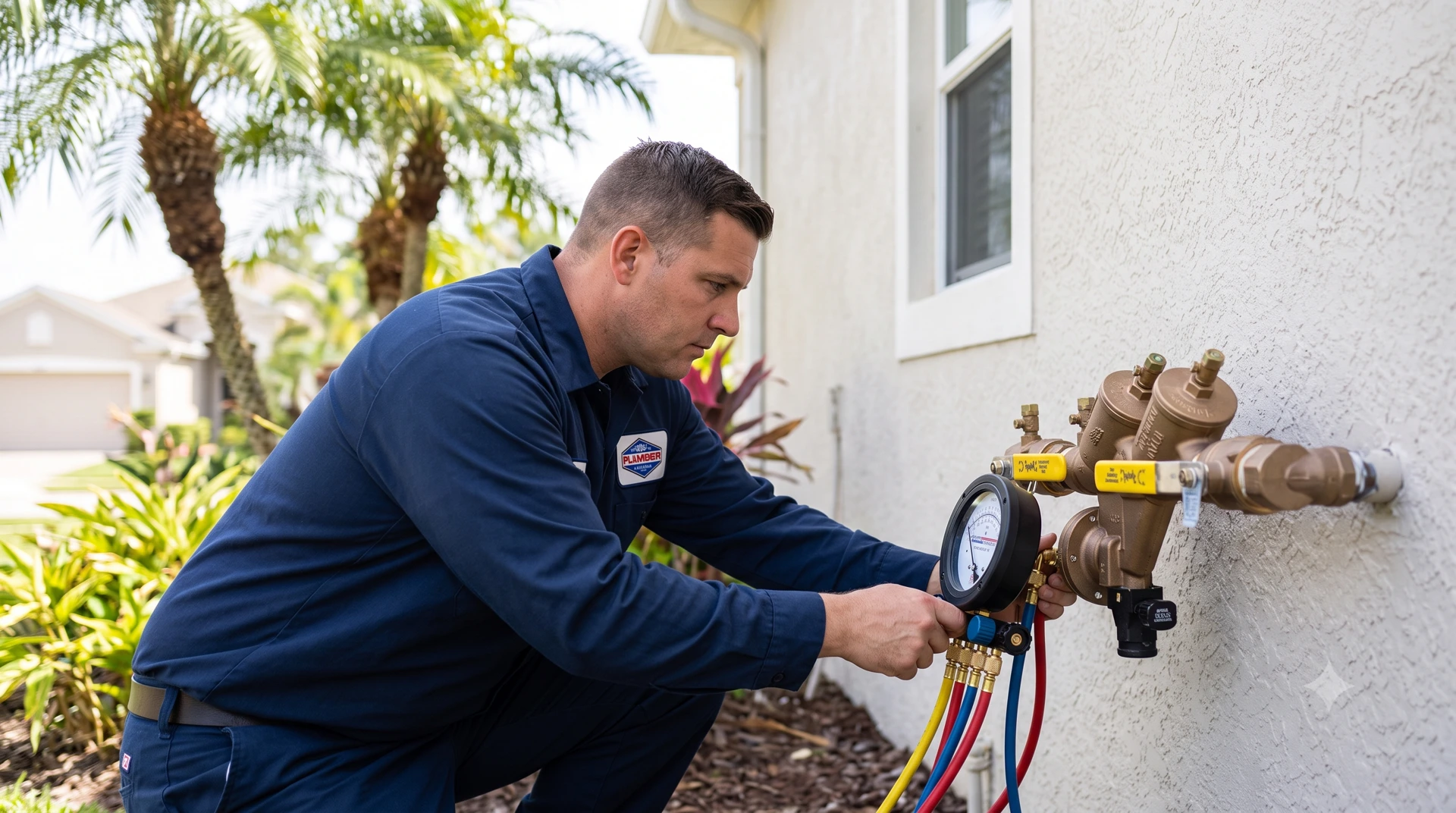
A certified technician connects a calibrated test kit to the device and verifies that the internal check valves close properly and prevent reverse flow. The process typically includes:
- Shutting down the device temporarily (usually a brief water interruption to the irrigation zone or connected system)
- Attaching gauges to measure pressure differentials across each check valve
- Confirming the relief valve opens correctly, on RPZ assemblies
- Documenting the results on the certified test form
- Submitting the report to the local water authority or property management, as required
The test typically takes 15 to 30 minutes, and if the device fails, we can usually repair or rebuild it on the spot with common replacement parts.
Signs Your Device Needs Attention
- Visible water leaking around the device or from the relief valve
- Inconsistent water pressure on the property
- You haven't received an annual testing reminder from your municipality
- The device hasn't been inspected in several years
- Visible corrosion, cracking, or damage to the assembly's housing
Backflow Prevention with Liberty Plumbing and Drain
With more than 19 years serving Boca Raton and communities across Palm Beach and Broward, we help residential and commercial property owners install, test, repair, and maintain backflow prevention devices in compliance with local regulations — and we handle the paperwork so you don't have to chase down forms or deadlines.
Need to schedule your annual test or install a new device? Call (561) 786-1849 for a free estimate.

-Logo.wine.svg)