7 Signs Your Main Sewer Line Needs Immediate Repair
Your home's plumbing system depends on one essential component that often goes unnoticed until something goes wrong—the main sewer line. This underground pipe carries wastewater from every drain, sink, toilet, shower, and appliance safely away from your property. When the sewer line becomes blocked, cracked, or damaged, the consequences can be expensive and disruptive.
Unfortunately, many homeowners mistake the early warning signs for simple drain problems. Ignoring these symptoms allows minor issues to become major plumbing emergencies involving water damage, sewage backups, foundation concerns, and costly repairs.
Understanding the warning signs of sewer line failure can help you take action before the problem escalates.
What Is the Main Sewer Line?
The main sewer line is the large underground pipe that connects your home's plumbing system to the municipal sewer system or your septic tank. Every time you flush a toilet, wash dishes, do laundry, or take a shower, wastewater travels through this pipe.
Because every drain in your home depends on it, even a small blockage can quickly affect multiple plumbing fixtures. Unlike individual drain clogs that usually impact one sink or toilet, sewer line problems often affect the entire home.
1. Multiple Drains Begin Clogging at the Same Time
One clogged sink usually isn't a major concern. However, if several drains throughout your home begin draining slowly or backing up simultaneously, the problem is likely much deeper inside the plumbing system.
Common signs include:
- Kitchen sink draining slowly
- Bathtub filling with water while using another fixture
- Bathroom sinks backing up
- Toilets flushing poorly
- Laundry drain overflowing
When several fixtures experience problems together, the blockage is often located inside the main sewer line rather than inside an individual drain.
2. Sewage Smells Inside or Outside Your Home
Your plumbing system is designed to keep sewer gases safely contained. If you begin noticing unpleasant sewer odors in your bathrooms, basement, kitchen, laundry room, or yard, something may be wrong.
Possible causes include:
- Broken sewer pipes
- Cracked drain lines
- Blocked sewer vents
- Sewer line leaks
- Dry drain traps
Persistent sewer odors should never be ignored because they usually indicate wastewater isn't flowing properly.
3. Water Backs Up Into Lower-Level Drains
One of the clearest indicators of a sewer line blockage is wastewater appearing in lower plumbing fixtures.
For example:
- Flushing a toilet causes water to appear in the bathtub.
- Running the washing machine floods the floor drain.
- Using the dishwasher causes the kitchen sink to back up.
This happens because wastewater has nowhere else to go and begins flowing backward through the lowest available drain.
Once backups begin occurring, professional inspection should be scheduled immediately.
4. Strange Gurgling Sounds
Air trapped inside blocked plumbing lines creates unusual sounds.
- Bubbling toilets
- Gurgling sinks
- Noisy bathtub drains
- Air escaping from drains
These noises occur because wastewater cannot flow freely through the pipe. Although many homeowners ignore these sounds, they often represent one of the earliest warning signs of a developing blockage.
5. Wet Areas or Unusually Green Grass
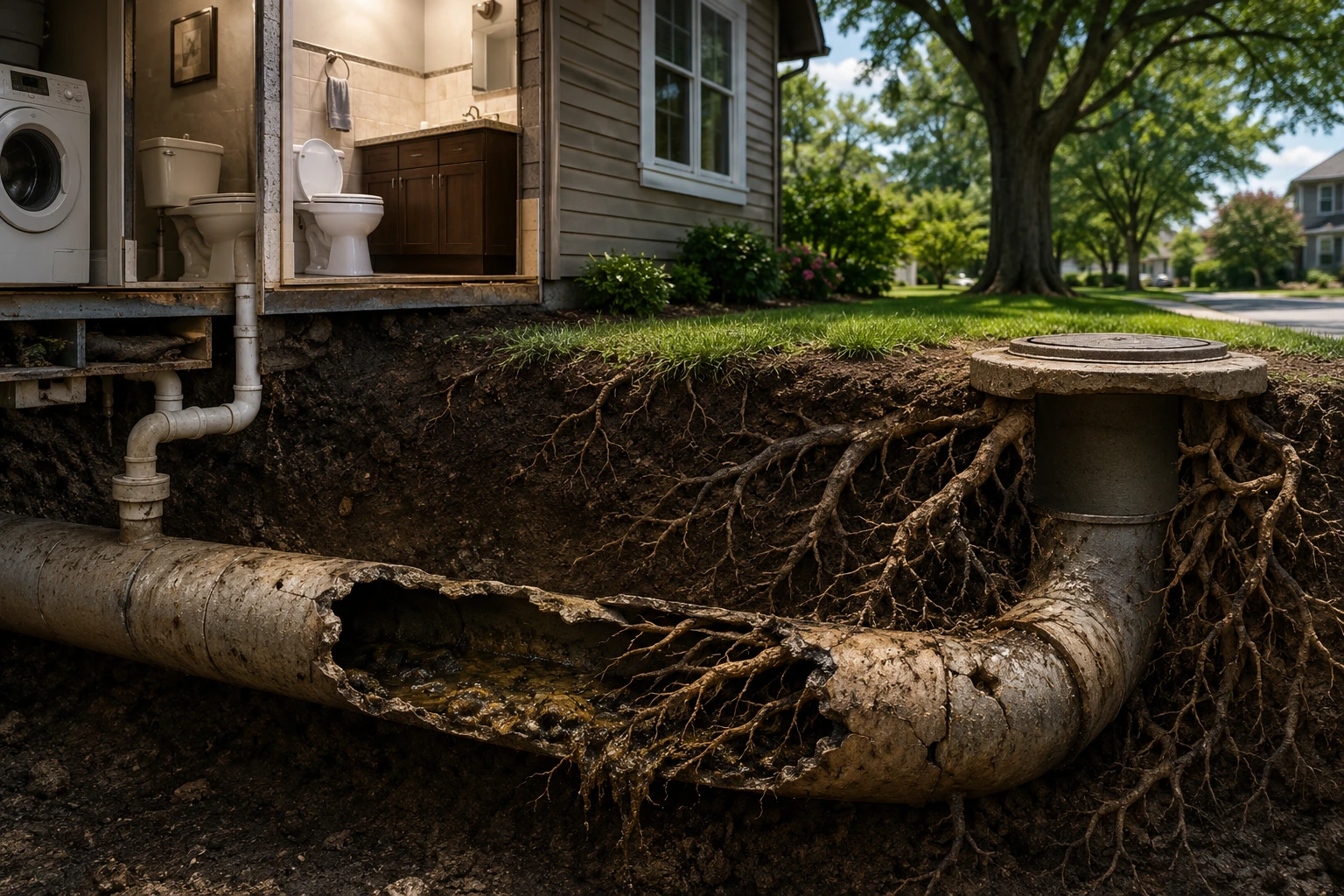
Your yard can reveal hidden plumbing problems. A leaking underground sewer pipe slowly releases wastewater into the surrounding soil.
Look for:
- Wet patches that never dry
- Bright green grass in one section
- Sinkholes
- Soft ground
- Standing water
Tree roots are especially attracted to moisture from leaking sewer pipes, making the problem progressively worse over time.
6. Frequent Drain Cleaning Doesn't Solve the Problem
Some homeowners repeatedly use chemical drain cleaners or plungers to fix recurring clogs.
If the same plumbing fixtures continue clogging every few weeks, the issue may not be inside the drain itself.
The real cause may be:
- Tree root intrusion
- Heavy grease accumulation
- Pipe corrosion
- Pipe collapse
- Severe mineral buildup
Professional camera inspections identify the exact cause rather than treating only the symptoms.
7. Foundation or Structural Concerns
Although less common, severe sewer leaks can eventually affect the stability of your property.
Escaping wastewater may wash away soil beneath concrete slabs or foundations, creating voids that lead to:
- Cracks in walls
- Uneven flooring
- Foundation movement
- Sidewalk settling
Repairing the sewer line early can help prevent far more expensive structural repairs.
What Causes Sewer Line Damage?
Tree Root Intrusion
Tree roots naturally seek moisture. Even tiny cracks in underground pipes allow roots to enter, where they continue growing until they create complete blockages.
Aging Pipes
Older homes often contain clay pipes, cast iron pipes, Orangeburg pipe, or aging PVC. Over time these materials deteriorate, increasing the likelihood of cracks, corrosion, and collapse.
Grease Accumulation
Cooking grease may appear harmless when poured down the sink. Once inside the sewer line, grease cools and hardens, trapping food particles and debris. Over months or years, this buildup can significantly restrict wastewater flow.
Flushing Non-Flushable Items
Many products labeled "flushable" do not break down as toilet paper does.
- Baby wipes
- Cleaning wipes
- Feminine hygiene products
- Cotton swabs
- Paper towels
- Dental floss
These items frequently contribute to major sewer blockages.
Ground Movement
Shifting soil caused by heavy rain, drought, earthquakes, or nearby construction can place stress on underground sewer pipes. This movement may cause pipes to crack, separate, or collapse.
How Professionals Diagnose Sewer Problems
Modern plumbing technology has made sewer inspections faster and more accurate.
Instead of digging up your yard to locate the issue, plumbers often perform a sewer camera inspection.
A waterproof camera is inserted into the pipe, allowing technicians to identify:
- Root intrusion
- Pipe cracks
- Offset joints
- Corrosion
- Grease buildup
- Collapsed sections
- Foreign objects
This process saves time and minimizes unnecessary excavation.
Sewer Line Repair Options
Hydro Jetting
High-pressure water removes grease, sludge, roots, and debris while thoroughly cleaning pipe walls.
Spot Repairs
If only one section of pipe is damaged, technicians may repair that isolated area.
Trenchless Sewer Repair
When appropriate, trenchless methods restore damaged sewer lines with minimal disruption to landscaping.
Full Sewer Replacement
If the pipe has extensive deterioration or repeated failures, replacement may be the most cost-effective long-term solution.
Tips to Prevent Sewer Line Problems
- Never pour grease down drains.
- Avoid flushing wipes or hygiene products.
- Schedule regular sewer inspections.
- Install root barriers when necessary.
- Address slow drains promptly.
- Have professional drain cleaning performed periodically.
Preventive maintenance is always less expensive than emergency repairs and helps extend the lifespan of your plumbing system.
Frequently Asked Questions
How often should a sewer line be inspected?
Most homes benefit from a professional inspection every two to three years. Older homes or properties with mature trees nearby may require more frequent evaluations.
Can tree roots permanently damage sewer pipes?
Yes. As roots expand, they can crack, separate, or completely collapse underground pipes if left untreated.
Are chemical drain cleaners safe?
Occasional use may clear minor clogs, but repeated use can damage pipes and usually does not resolve main sewer line blockages.
Is hydro jetting better than snaking?
Hydro jetting removes grease, sludge, mineral deposits, and debris from the entire pipe interior, while traditional drain snakes primarily create an opening through the blockage.
Trust Liberty Plumbing & Drain
Ignoring sewer line warning signs rarely makes the problem disappear. Early diagnosis can prevent costly water damage, sewage backups, and major excavation projects.
Whether you're experiencing recurring drain problems, unpleasant sewer odors, or slow drainage throughout your home, the experienced professionals at Liberty Plumbing & Drain are ready to provide expert inspections, advanced diagnostics, and reliable repair solutions that restore your plumbing system quickly and efficiently.

-Logo.wine.svg)